Dogs do not sweat the way we do. They have a few sweat glands in their paw pads, and that is about it. Almost all of their cooling comes from panting, which works well enough on a mild day and very badly on a hot, humid one.
That is why a temperature that feels pleasant to you in a T-shirt can be hard work for a Labrador in a black fur coat. And it is why every summer, vets see dogs with heatstroke who were only out for a normal walk.
Keeping a dog cool is mostly common sense and a bit of planning.
Move the walks
The single biggest change you can make is timing. In a heatwave, walk early and late. The 7 a.m. walk in July is a completely different thing from the 1 p.m. one, and your dog knows it even if your schedule does not.
Aim for the cool hours before about 9 a.m. and after the sun has properly dropped in the evening. Keep the pace easy, pick routes with shade, and cut the distance on the worst days. A slow sniff around the block is fine.
If it is really hot, skip the walk altogether. That feels wrong to a lot of owners. It is still the right call.
Check the pavement with your hand
Tarmac, concrete and artificial grass soak up heat and hold it long after the air starts to cool. On a sunny afternoon they can get hot enough to burn paw pads.
The test is simple. Press the back of your hand on the ground for seven seconds. If you cannot comfortably keep it there, it is too hot for your dog’s feet. Stick to grass, or wait.
Water everywhere
Put out more water than you think you need, and put it in more than one place. A Lab that drinks half the bowl in one go will empty it faster in hot weather, and a bowl left in the sun turns warm and unappealing quickly. Refresh it through the day and add a few ice cubes if your dog likes them.
On walks and car trips, carry water and a collapsible bowl. Offer a drink every so often rather than waiting for your dog to look thirsty.
Our editor’s beagle, Moss, refuses to drink from anything other than his own bowl, which is a delight on day trips. If your dog is fussy like this, bring the actual bowl. It is worth the space in the bag.
Shade, airflow and a cool spot to lie
Dogs are good at finding the coolest place in the house. Help them out. Close curtains on the sunny side, open windows for a through-draught, and leave a fan running in the room they like (pointed near them, not straight at them, so they can move away).
Tiled floors are prime real estate in summer. If you do not have any, a damp towel or a cooling mat gives your dog something cold to press against. Some dogs ignore them and lie on the kitchen floor instead, which works just as well.
In the garden, make sure there is proper shade all day, including the afternoon. The patch under the tree at 10 a.m. may be in full sun by 3 p.m.
Cool them down gently
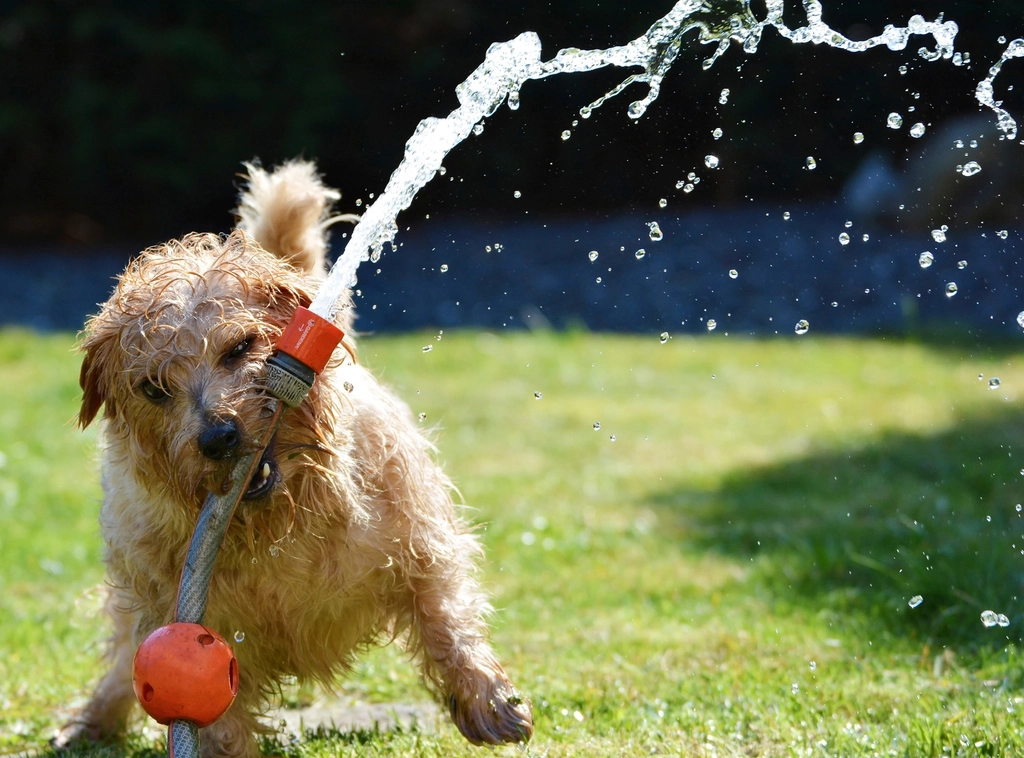
A shallow paddling pool is cheap and many dogs love one. So does a cold, damp towel over the back, or a gentle hose down of the belly and legs. Frozen treats help too: a stuffed Kong put in the freezer overnight, or some plain yoghurt frozen in an ice cube tray. Skip anything with xylitol or chocolate, both of which are toxic to dogs.
Ice-cold water baths are not needed for everyday cooling. Cool, not freezing, is the aim.
Never leave a dog in a car
Not for a few minutes, not with the windows cracked, not in the shade. On a warm day the inside of a parked car heats up far faster than people expect, and it can become dangerous in well under half an hour. Dogs die in cars every summer, almost always with owners who thought they would only be a moment.
If you have errands to run, leave the dog at home.
Some dogs need extra care
All dogs can overheat, but some are at much higher risk. Keep a closer eye on:
- Flat-faced breeds like Pugs, French Bulldogs, Bulldogs and Boxers. Their short airways make panting far less efficient, and they can struggle on days that seem only mildly warm.
- Puppies and older dogs.
- Overweight dogs.
- Dogs with heart or breathing problems.
- Thick or double-coated breeds, such as Huskies, Malamutes and Chow Chows.
- Very energetic dogs who will not stop on their own. Some spaniels and collies would chase a ball until they fell over, so it is up to you to call time.
On grooming: a tidy trim can help some long-haired dogs, but do not shave a double-coated breed down to the skin. That coat insulates against heat as well as cold, and a close shave can leave them prone to sunburn. Ask a good groomer what suits your dog. Dogs with pale or thin fur on their noses and ears can burn too, so a pet-safe sunscreen is worth having.
Know the signs of heatstroke
Heatstroke happens when a dog’s body temperature climbs too high and they cannot bring it down. A normal temperature is roughly 38.3 to 39.2 C (101 to 102.5 F). Above about 40 C things become serious fast.
Early signs include heavy panting that does not ease, drooling, a bright red tongue or gums, restlessness and looking for shade. As it gets worse you might see wobbliness, vomiting or diarrhoea, glazed eyes, collapse or fitting.
If you suspect heatstroke, act at once. Move your dog somewhere cool and shaded. Pour cool (not ice-cold) water over the body, or use wet towels and keep swapping them so they do not warm up and trap heat. Put a fan on if you can, and let them drink small amounts. Then call your vet straight away and get there as soon as possible, cooling on the way. Heatstroke can cause internal damage that is not obvious from the outside, so a dog who seems to recover still needs checking.
Summer can still be fun
None of this means a summer locked indoors. Early morning beach walks, a lake swim for dogs who like water, sniffy games in the shade and a frozen treat in the evening are all perfectly good ways to spend a hot week. Plenty of dogs rather enjoy it.
Moss spends most heatwaves stretched across the hallway tiles like a rug, and only gets up when he hears the freezer door.